
Lithium-Ion Battery for Two-Wheeler vs Lead-Acid and Other Technologies
2026-03-23
Understanding lithium-ion battery chemistry—particularly LFP vs NMC—is essential for anyone making decisions about electric motorcycles, e-bikes, or fleet operations. The chemistry inside the pack determines how far you ride, how long the battery lasts, how safe it is under stress, and what it truly costs to operate over years of daily use. This article breaks down the electrochemistry behind the batteries powering today's electric two-wheelers, so you can move from spec sheet comparisons to informed, real-world decisions.
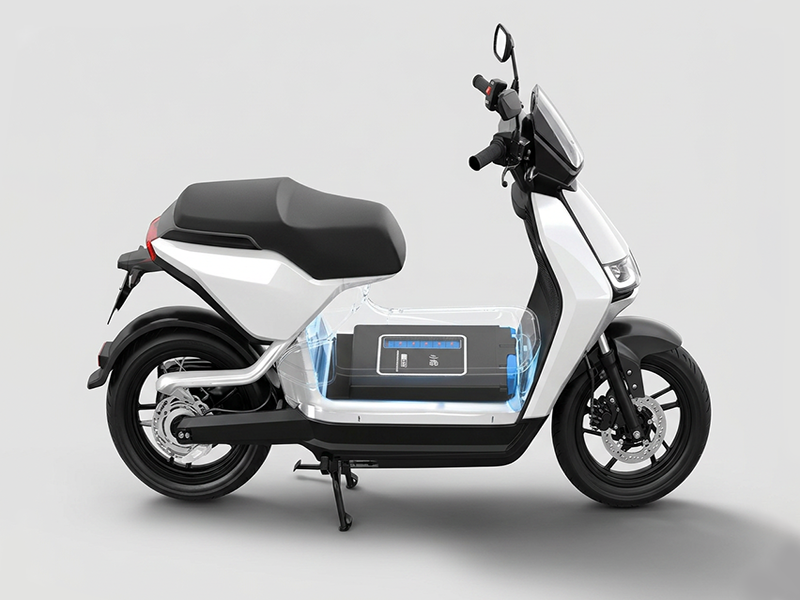
A lithium-ion battery stores and releases energy through the movement of lithium ions between two electrodes—an anode (typically graphite) and a cathode—through an electrolyte (typically liquid in commercial cells).
The cathode material is the primary factor defining the battery's chemistry, and changing it reshapes nearly everything: energy density, thermal behavior, cycle life, and cost. This is where manufacturers make their most consequential engineering trade-offs:
A cathode that holds more lithium per unit of mass delivers higher energy density and longer range, but often at the cost of thermal stability.
A more structurally stable cathode is less likely to break down under heat and stress, making it safer and longer-lived, but heavier for a given capacity.
Every lithium-ion battery chemistry on the market today sits somewhere on this spectrum, and the right answer depends entirely on the application.
Two lithium-ion chemistries dominate real-world electric two-wheeler deployments: Lithium Iron Phosphate (LFP) and Nickel Manganese Cobalt (NMC). Together, they cover the vast majority of production electric motorcycles, scooters, and e-bikes globally—and understanding why requires looking at what each chemistry actually does inside the cell.
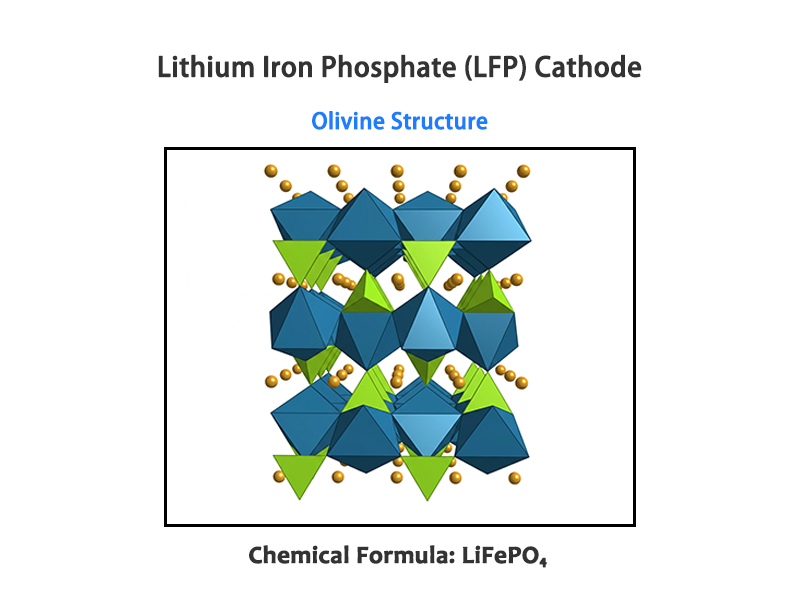
LFP (LiFePO₄) uses an olivine crystal structure whose phosphorus-oxygen bonds are exceptionally resistant to breaking down under heat—far more so than nickel-based cathodes. This structural stability is why LFP is the chemistry of choice wherever safety and multi-year durability are non-negotiable.
Key characteristics:
Thermal safety: Thermal runaway onset typically above about 500°C; highly resistant to fire even under mechanical stress or collision
Cycle life: Typically 1,500–3,000 cycles depending on operating conditions, depth of discharge, and temperature; well-suited for daily urban charging patterns across several years of service
Energy density: About 160–180 Wh/kg at the cell level; competitive for urban range requirements, though heavier than NMC for the same capacity
Cost: Lowest cost per kWh among mainstream lithium-ion chemistries, delivering a strong total cost of ownership advantage for fleet operators
Cold weather: Performance drops noticeably below 0°C; integrated pack heating may be needed in colder climates
LFP held nearly 50% of global EV battery capacity shipments in 2025, up from just 10% in 2020. This growth is driven precisely by the cost and safety advantages that matter most in urban and fleet mobility.
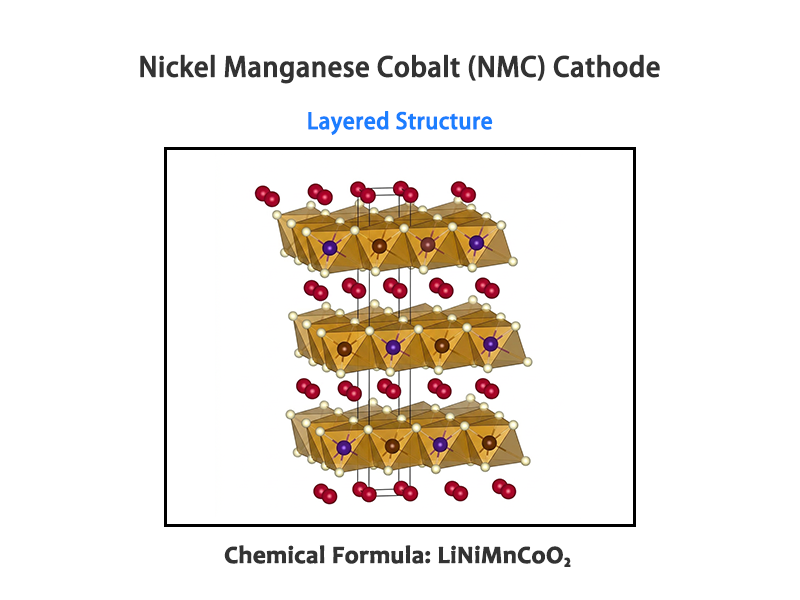
NMC (LiNiMnCoO₂) uses a layered cathode structure with adjustable ratios of nickel, manganese, and cobalt, letting manufacturers tune the chemistry toward energy density or structural stability. Higher nickel content pushes performance toward 200–250+ Wh/kg, enabling lighter, more compact packs with meaningful range gains over LFP in the same physical form factor.
Key characteristics:
Energy density: 200–250+ Wh/kg at the cell level; more range in the same physical space compared to an equivalent LFP pack
Nominal voltage: about 3.6–3.7V per cell vs. LFP's about 3.2V, enabling higher pack voltage with fewer cells in series
Cycle life: Typically 800–1,500 cycles depending on formulation and usage; adequate for lower-frequency charging scenarios and performance-focused applications
Thermal threshold: Thermal runaway onset typically around 200–250°C; more rigorous thermal management is required compared to LFP
Cost: Higher per kWh than LFP, though the gap narrows as higher-nickel, lower-cobalt formulations reach production scale
NMC is the natural choice for electric motorcycles where range, weight, and performance need to be balanced against cost. This includes mid- to long-range commuters, courier bikes, and higher-performance delivery vehicles, where every kilogram and every kilometer of range carries business value.
Feature | LFP | NMC |
Cathode structure | Olivine (LiFePO₄) | Layered oxide (NiMnCoO₂) |
Nominal cell voltage | ~3.2V | ~3.6–3.7V |
Energy density (cell) | ~160–180 Wh/kg | ~200–250+ Wh/kg |
Cycle life | 1,200–1,500 cycles @ 70–80% | 800–1,200 cycles @ 70–80% |
Thermal runaway threshold | ~500°C | ~210°C |
Cold weather sensitivity | Higher | Moderate |
Cost per kWh | Lower | Higher |
Best fit | Fleet, daily commute, shared mobility | Performance, courier, mid-to-long range |
Beyond LFP and NMC, a handful of other chemistries appear in specific corners of the two-wheeler market.
Nickel Cobalt Aluminum (NCA) achieves high energy density and is well-known in high-end electric cars, but its lower thermal stability, shorter cycle life, and higher cost make it a poor fit for mass-market scooters and fleet e-bikes. NMC generally provides a more balanced solution.
Lithium Manganese Oxide (LMO) offers reasonable thermal stability due to its spinel structure but suffers from lower cycle life and capacity, limiting its role in modern two-wheeler applications.
Lithium Titanate (LTO) stands out for extraordinary cycle life and fast-charge capability, but its very low energy density (about 70 Wh/kg) makes it impractical for any range-focused electric vehicle.
Sodium-ion (Na-ion) uses abundant, low-cost materials and performs well in cold temperatures. It is a chemistry to watch as it matures toward commercial scale, although its energy density still trails LFP at current development stages.
While these alternative chemistries fill niche roles, most real-world deployments still rely on established lithium-ion systems, particularly LFP and NMC, where engineering is mature, supply chains are deep, and performance is proven.
Two development vectors are drawing the most attention for electric two-wheelers in the near term.
Silicon anodes are beginning to appear in commercial cells. Replacing graphite (about 372 mAh/g) with silicon (about 4,200 mAh/g) enables much higher energy density and faster charge acceptance. The engineering challenge is silicon's up to 300% volumetric expansion during charging, which can fracture the anode over repeated cycles. Silicon-carbon composites and nano-structured formats are progressively solving this, with some formulations already delivering 20%+ more energy in an equivalent form factor.
Solid-state batteries replace the liquid electrolyte with a solid ceramic or polymer medium, eliminating the flammable electrolyte entirely and enabling lithium-metal anodes. Projected gravimetric densities of 300–500+ Wh/kg and intrinsic fire resistance represent a significant generational leap. Commercial availability at production scale for two-wheelers remains several years away, and manufacturing costs currently remain a substantial barrier to mass-market adoption.
These advances are promising, but still years away from being the batteries inside the electric motorcycles or e-bikes operating on the streets. In 2026, the competitive edge isn't won by waiting for future breakthroughs, but by deploying today's proven lithium-ion batteries correctly—within infrastructure designed to safely and efficiently extract their full service life.
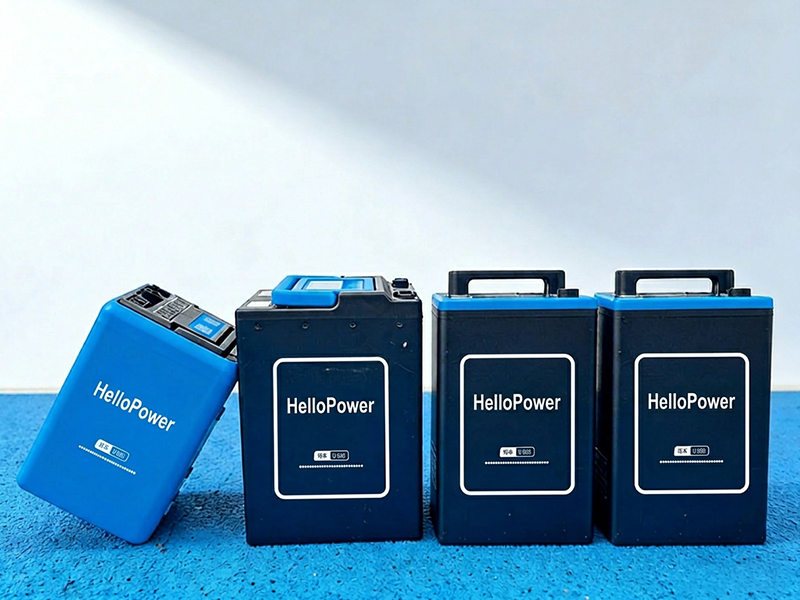
HelloPower—co-founded by Hello Inc., Ant Group, and CATL (the world's leading lithium-ion cell manufacturer)—offers a complete battery swapping ecosystem built around this engineering reality. The product lineup spans both LFP and NMC chemistries across voltages from 48V to 76V and capacities up to 4+ kWh, letting operators match chemistry to application with precision: LFP where longevity and safety are the priority, NMC where energy density and range take the lead.
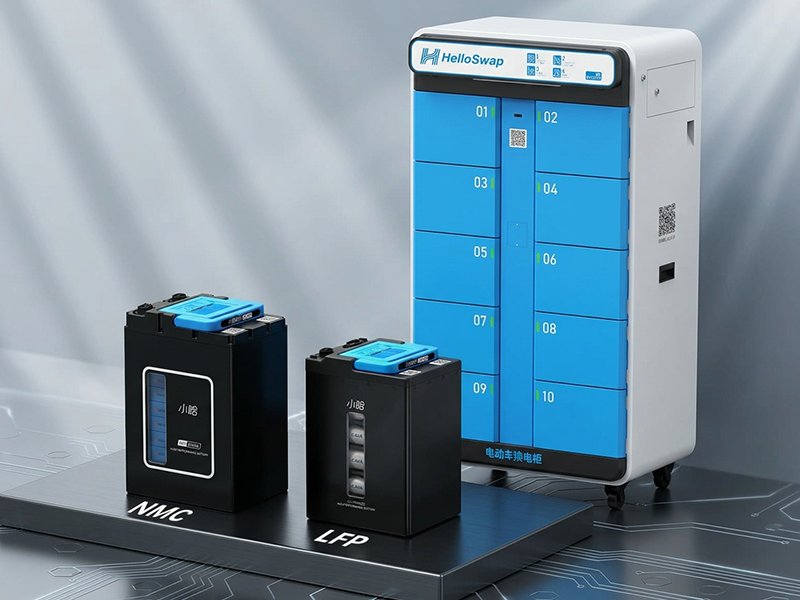
Every HelloPower battery integrates a smart BMS with 4G IoT connectivity, GPS tracking and OTA firmware upgrade capability, so each unit is actively monitored and managed across its full operational life, not just at the point of manufacture.
IP54 waterproof swapping cabinets ranging from 5 to 12 slots, with output from 5.5 kW up to 9 kW, all include built-in fire suppression systems and 24/7 unattended operation support—with a seamless swap completed in as little as 6 seconds.
Backed by operational experience across 100+ countries, managing 15 million operating vehicles and 6 million batteries through 500,000 swapping cabinets globally, the HelloSwap system is field-proven at a scale no laboratory test can replicate.
Ready to build or expand a battery swapping operation? Request specifications or discuss your project by filling out the contact form.
Contact Us
hellopowerglobal@hellobike.com
Location
2F, Building 1, No.898 XiuWen Road, MinHang District, Shanghai, China
Copyright © 2024 福建宁德惠智无限科技有限公司 All Rights Reserved. 闽ICP备2023025900号-3.


