
How a Smart Battery Swap Station Works for Electric Two-Wheelers
2025-12-22
In the early days of electric two-wheelers (E2Ws), batteries were simple components fixed inside the vehicle and charged overnight. Battery swapping has fundamentally changed that model. In a modern Battery-as-a-Service (BaaS) system, the smart swappable battery is a shared, high-utilization asset that moves constantly between vehicles, riders, and cabinets. This shift transforms the E2W battery from a basic energy source into a complex engineered system. To operate reliably at scale, these e-bike swappable batteries require a purpose-built design in chemistry, voltage architecture, mechanical durability, and intelligent control.
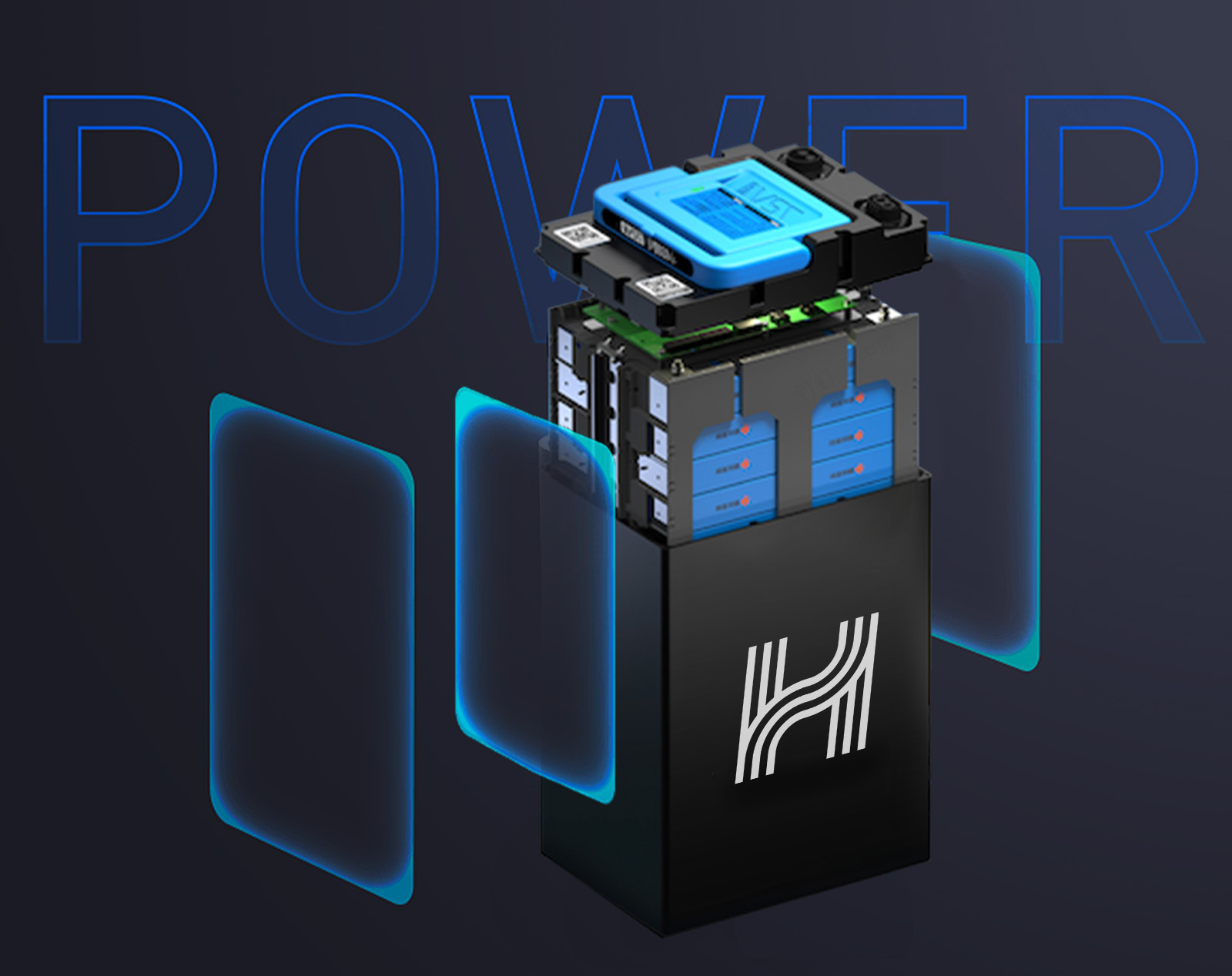
The most common misconception is that a swappable battery is just a standard e-bike battery with a handle. In reality, they are two different classes of hardware designed for different missions.
Fixed Battery: Designed to stay in one vehicle. It is protected by the bike's frame and suspension, charging in a stable environment.
Swappable Battery: Designed to be removed, shared, and reused. It lives a high-stress life—manually removed from a scooter, carried through rain, shoved into a cabinet, and fast-charged while the rider grabs a coffee.
The Reality: Swappable batteries face harsher conditions than consumer batteries and must be built like industrial tools, with durable casings, reliable connectors, and smart software. Using purpose-built hardware ensures uptime and reduces failures.
When you look at a spec sheet, you'll see "Lithium-ion." But in the swapping world, "Lithium-ion" is just a category. The actual performance depends on the active material inside the battery cells, which determines energy and lifespan. While entry-level e-bikes might use cheaper lead-acid or generic lithium packs, professional battery swapping networks standardize on two specific chemistries: NCM and LFP.
Feature | NCM (Nickel Cobalt Manganese) | LFP (Lithium Iron Phosphate) |
Primary Strength | Range & Weight | Lifespan & Safety |
Typical Cycle Life | ~1,000 cycles | 2,000+ cycles |
Cold Weather | Good | Moderate |
Ideal Fleet | Long-range logistics | High-frequency urban delivery |
Nickel Cobalt Manganese is designed for maximum power in minimum space.
The Mechanism: NCM cathodes offer higher energy density. This allows engineers to build a swappable E2W battery that is light enough to carry but still holds enough energy for long-range deliveries.
Cold Weather Performance: In regions with freezing winters, NCM typically retains slightly better discharge capability compared to standard LFP. While both chemistries degrade in extreme cold, NCM is often the preferred choice for markets where maintaining range in sub-zero temperatures is critical.
Best For: Long-distance courier fleets or regions with cold winters.
Lithium Iron Phosphate is designed for safety and endurance.
The Mechanism: The key to LFP is the Phosphate (P-O) bond. It is an incredibly strong chemical link that is difficult to break, even under high heat. This gives LFP superior chemical stability compared to layered oxide chemistries such as NCM, reducing the risk of thermal runaway under abuse conditions.
The Advantage: It is intrinsically safer and lasts longer. A good LFP pack can withstand 2,000+ charge cycles under controlled conditions before it starts to degrade significantly.
The Trade-off: LFP has lower energy density (it's heavier/bulkier for the same range).
Best For: High-frequency urban delivery (food delivery, tropical climates) where asset longevity drives profit.
Why Battery Chemistry Matters for Operators: Your choice of chemistry dictates your operational model; choosing the right chemistry ensures your swappable E2W battery lasts under expected usage conditions and environmental factors.
When fleet managers are looking for "48V," "60V," or "72V" batteries, they often treat them as fixed numbers. In reality, these are just commercial categories to simplify classification and supply chains: 48V is commonly used for entry-level e-bikes, 60V is typical in standard delivery scooters, and 72V is widely seen in high-speed or heavy logistics vehicles. These labels provide a rough guide but never truly define the battery's actual electrical behavior.
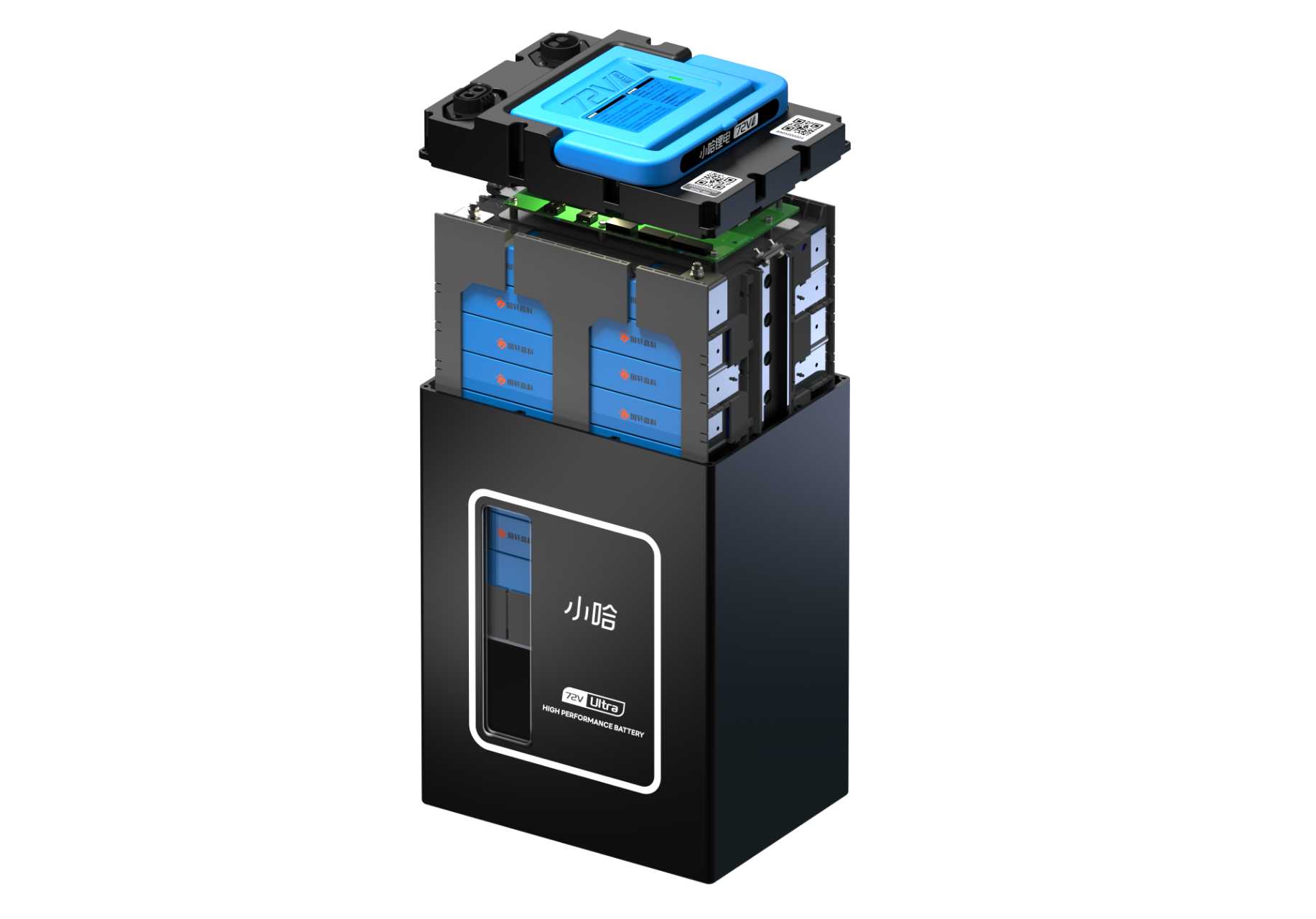
E2W batteries labeled "60V" may in fact have different nominal voltages of 58.4V, 62V, or higher, and behave very differently electrically. For example, a 17-series NCM battery and a 20-series LFP battery may both be marketed as "60V," but their voltage curves, charge/discharge characteristics, and load responses are distinct. The label signals the motor class but doesn't guarantee compatibility with your specific E2Ws or swap cabinets.
The actual behavior of a swappable battery is determined by three main factors:
Series Count (S): The number of cells connected in series. More cells mean higher nominal voltage, but "S" alone is not enough to predict pack behavior—cell voltage matters.
Nominal Cell Voltage: Different chemistries have different typical voltages. For example, LFP cells usually have a nominal voltage around 3.2V, while NCM cells are typically 3.6–3.7V.
State of Charge (SOC): The voltage of any battery changes as it charges or discharges. A pack can be higher than its nominal voltage when fully charged and lower when nearly empty.
Together, these factors define how a battery performs under load, how it charges, and how it interacts with the vehicle and the cabinet.
How Battery Swapping Systems Ensure Compatibility: Successful operators standardize on the series count, cell type, and operating voltage range across the fleet to ensure every swappable battery communicates correctly with vehicles and cabinets, preventing mismatches, errors, and downtime.
A swappable battery is the ultimate "off-road" component. It spends its life vibrating on scooter floorboards, being dropped on sidewalks, and getting splashed by puddles. To ensure reliability, the physical design must address three specific threats.
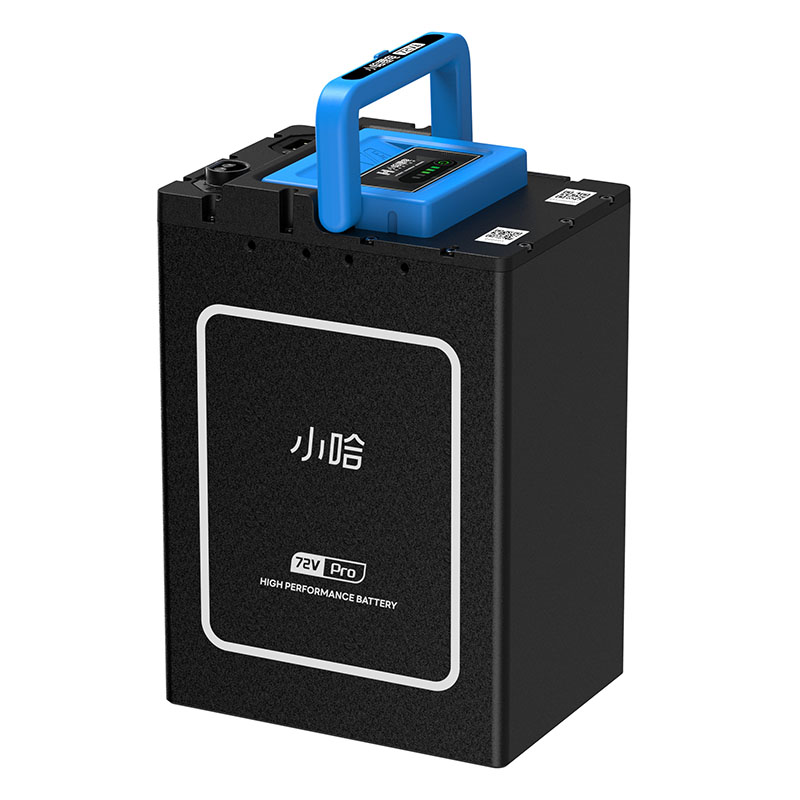
Water is the enemy of lithium. Water ingress can cause short circuits, corrode copper tracks, and form dendrites, causing latent failures or fire risk. Since swappable batteries are exposed to the elements during every swap, they rely on Ingress Protection (IP) standards.
Solution: IP67-rated casings protect against temporary immersion and dust. Seals and gaskets ensure the pack remains dry even during outdoor handling.
Result: Proper protection prevents unexpected downtime and maintains rider confidence, avoiding service interruptions during rainy seasons.
Delivery vehicles may operate on rough roads for 8-10 hours a day. Without protection, constant vibrations on rough roads can fatigue internal spot welds, disconnect cells, and reduce battery lifespan.
Solution: Structural potting fills empty space with thermal adhesive, creating a solid, brick-like pack that secures cells and dissipates heat.
Result: Reduced vibration-related failures minimize maintenance, prevent unexpected vehicle immobilization, and extend battery life.
Every time a battery is swapped, the electrical connector rubs against the cabinet socket. Over thousands of swaps, rigid connectors can wear out or break if not aligned perfectly, causing poor contact or electrical failure.
Solution: Floating connectors allow slight movement (1–2mm), self-aligning during swaps to reduce mechanical wear and ensure reliable connections.
Result: Consistent electrical contact across thousands of swaps prevents downtime, ensures safe charging, and supports high-frequency operations.
Quick Note: Mechanical design determines fleet reliability. Rugged casings, vibration-resistant internals, and durable connectors prevent downtime, reduce maintenance costs, and ensure batteries survive thousands of swaps—keeping E2W fleets running smoothly, even in harsh urban environments.
Hardware is only half the story. In modern E2W battery swapping networks, the battery is not just an energy container—it functions as an intelligent data node. At the core of this system is the Battery Management System (BMS), which governs safety, communication, and lifecycle control.
When a battery is inserted into a swap cabinet, power does not flow immediately. Instead, the battery and cabinet perform a digital "handshake" to verify:
Identity – Is this an authorized battery belonging to the network?
Health status – Are voltage and temperature within safe limits?
Operational status – Is the battery eligible for charging or use?
This communication typically runs over CAN Bus (Controller Area Network), a proven automotive-grade protocol designed for reliability in noisy electrical environments. It ensures that incompatible, damaged, or unsafe batteries are never energized, significantly reducing operational risk.
Over time, individual cells inside a battery may age at different rates. If left unmanaged, weaker cells limit the usable capacity of the entire pack. To manage this, the BMS system uses cell balancing.
Passive balancing reduces imbalance by dissipating excess energy. It is simple but inefficient.
Active balancing redistributes energy from stronger cells to weaker ones, helping maintain consistent performance and slowing capacity loss.
In practice, batteries with active balancing can remain in service significantly longer before performance degradation forces retirement than packs relying solely on passive balancing—especially in high-frequency swapping environments.
Modern smart swappable batteries are integrated into cloud-managed systems. Operators can monitor status in real time and remotely disable unauthorized units. Once a battery is flagged as unauthorized, its BMS disables all charging and discharging activity, rendering the battery inoperable in vehicles or cabinets and effectively eliminating theft value.
What This Means for Operators: In a swapping network, the battery is the core revenue asset. The smart layer ensures every kilowatt-hour is tracked, protected, and monetized—turning batteries from consumables into secure, manageable assets.
In E2W battery swapping, performance is engineered before the first rider ever plugs in. Chemistry sets lifespan, voltage architecture ensures compatibility, mechanical design delivers durability, and intelligent software provides control. Operators who master these fundamentals can deploy battery swapping networks that scale reliably, while those who overlook them risk downtime, increased maintenance, and replacement costs.
At HelloPower & HelloSwap—China's leading two-wheeler energy and service provider co-founded by Hello Inc., Ant Group, and CATL—our solutions are built around these industrial realities. We help operators deploy safe, durable, and scalable E2W battery swapping networks worldwide. Contact us to explore smart swappable battery systems tailored for reliable, real-world operations.
Contact Us
hellopowerglobal@hellobike.com
Location
2F, Building 1, No.898 XiuWen Road, MinHang District, Shanghai, China
Copyright © 2024 福建宁德惠智无限科技有限公司 All Rights Reserved. 闽ICP备2023025900号-3.


